
How Mississippi Arrests Enter the Record
An arrest in Mississippi becomes a record close to home. The county jail does the booking. City police may write a separate incident report, and the court adds the case outcome later. One county's online page may show only who is in custody right now, while another lets you query a booking date. Results differ that much. Mississippi runs 82 county systems, and online tools, photo display, and update windows vary from one to the next. An arrest made by the Highway Safety Patrol can show up in a Department of Public Safety release. The booking record still sits with the county jail that took the person in. That split shapes every search.
Search with that structure in mind. A name in a press release is not a statewide roster entry. A custody result is not today's news. The Mississippi Public Records Act and the jail-docket statute create access rights. Neither law requires a live search page. Some counties use vendor portals. Others answer a records request or hand over a clerk's copy of the docket. A blank web result can mean delay, a privacy limit, a closed case, or a system that never went online.
The fastest search follows the record. Identify the county where the arrest or booking happened first. Then open that county's official jail page or contact its records custodian. A Highway Patrol arrest may surface in DPS news. But the county jail is where booking and custody get confirmed.
Route Mississippi Bookings by County
County is the routing detail that matters most. A city arrest or a Highway Patrol stop can end up in a county jail, where the sheriff keeps the booking docket. The city agency may hold a separate incident report of its own. The statewide directory lists each county site and seat.
Portal labels differ from place to place. "Current inmates" means people held now, not everyone arrested in the past day. "Books 24hr" may be a rolling intake view. Search fields can include a name, booking or subject number, custody status, and dates.
Know the arrest city? Select its county in the County Directory in the main navigation. The county site may say whether city police post a separate log or send booking questions to the sheriff.
- Pin down the likely county and the agency that made the arrest.
- Open that county's official jail or sheriff page and look for intake dates, booking number, and custody status.
- If the person is not listed, ask the records unit about a recent intake or use the county docket request path.
Can a current-inmate result prove someone was arrested today? No. It proves custody at the moment the page updates, so the booking date and receiving agency must be checked separately.
Mississippi Arrests in Same-Day Views
Mississippi has no single statewide same-day arrest feed. Three county examples show why labels matter. Adams offers separate 24-hour and 72-hour views, Pearl River calls its intake page "Books 24hr," and Wayne accepts a booking-date range. These are local tools, not a state service or a county ranking.
| Verified example | What the source supports | Limit to keep in mind |
|---|---|---|
| Adams County | Separate 24-hour and 72-hour portal views; intake and release details. | No posted refresh guarantee or permanent archive statement. |
| Pearl River County | A “Books 24hr” view with booking and release fields. | No durable last-updated time; past-inmate access was not public in the research check. |
| Wayne County | Name, subject and booking numbers, custody status, and booking-date fields. | A date query, not a labeled rolling 24-hour feed. |
Other counties display current inmates. But those pages do not necessarily equal the last 24 hours. Current custody proves no arrest date. It can also omit someone booked and released. For a fresh booking, use the county source or call its records unit. The Daily Arrest Report compares verified same-day windows. It also explains how to check a late entry.
Note: A just-processed booking may appear only after the receiving jail enters it and the public page refreshes.
Official Sources for Mississippi Booking News
Start any search with the agency that owns the record. County jail pages cover bookings and current custody. The court portal covers case activity. State or federal systems answer supervision or custody questions of their own. A public-affairs release can describe an operation without listing every person booked. Label each source by its role. That habit keeps an event report from being mistaken. It stops confusion with a jail docket or a court outcome.
| Channel | Photo? | Official? | How to use it |
|---|---|---|---|
| County sheriff or jail roster | Sometimes, by local policy. | Yes, for the custodian's records. | Check the arrest county's current roster or booking page. |
| Adams, Pearl River, and Wayne county views | Adams photos where available; others vary. | Yes, county-linked sources. | Use the 24-hour or date-query label shown by each county. |
| Mississippi DPS News Archive | May show an agency image, not a roster photo. | Yes, state agency releases. | Read for selected Highway Patrol, MBI, narcotics, and joint-operation news. |
| Mississippi Electronic Courts | Not a booking-photo source. | Yes, court system. | Check case events and disposition; access varies by court and case type. |
| MDOC inmate search | Yes, on correctional profiles. | Yes, state corrections. | Use after sentencing or transfer to state custody, not for a fresh county arrest. |
| BOP locator | No public booking photos. | Yes, federal corrections. | Check federal custody records from 1982 onward. |
| RecentlyBooked Mississippi | May reproduce photos. | No, secondary. | Rolling county index; verify with the official custodian. |
| Busted Newspaper Mississippi | May reproduce photos. | No, secondary and not statewide-complete. | Check coverage and listing date; confirm any detail at the county source. |
| Mugshots.com Mississippi | May display historical copies. | No, secondary. | Use only as an unverified lead, not as a current county record. |
| Arrests.org Mississippi | May reproduce photos. | No, secondary. | County search and pagination can be stale or incomplete. |
| Mugshots.zone county hosts | May reproduce photos. | No, secondary; no stable statewide index verified. | County-host pages vary. Check the originating sheriff or jail. |
The Weekly Arrest Log separates county pages, statutory dockets, and news blotters. WLBT Crime and WCBI Crime publish selected stories, not complete custody logs.
Note: A news archive or commercial index can retain a copy after the county page changes, so use the date and source label shown.
The DPS public-data portal labels these as separate public datasets. It lists Arrest Data, Citation Data, and Crash Data. It offers statewide enforcement context rather than a live name-and-photo roster.
The DPS portal shows how those public-data categories are labeled. Its datasets answer trend questions. They do not name who entered a county jail today.
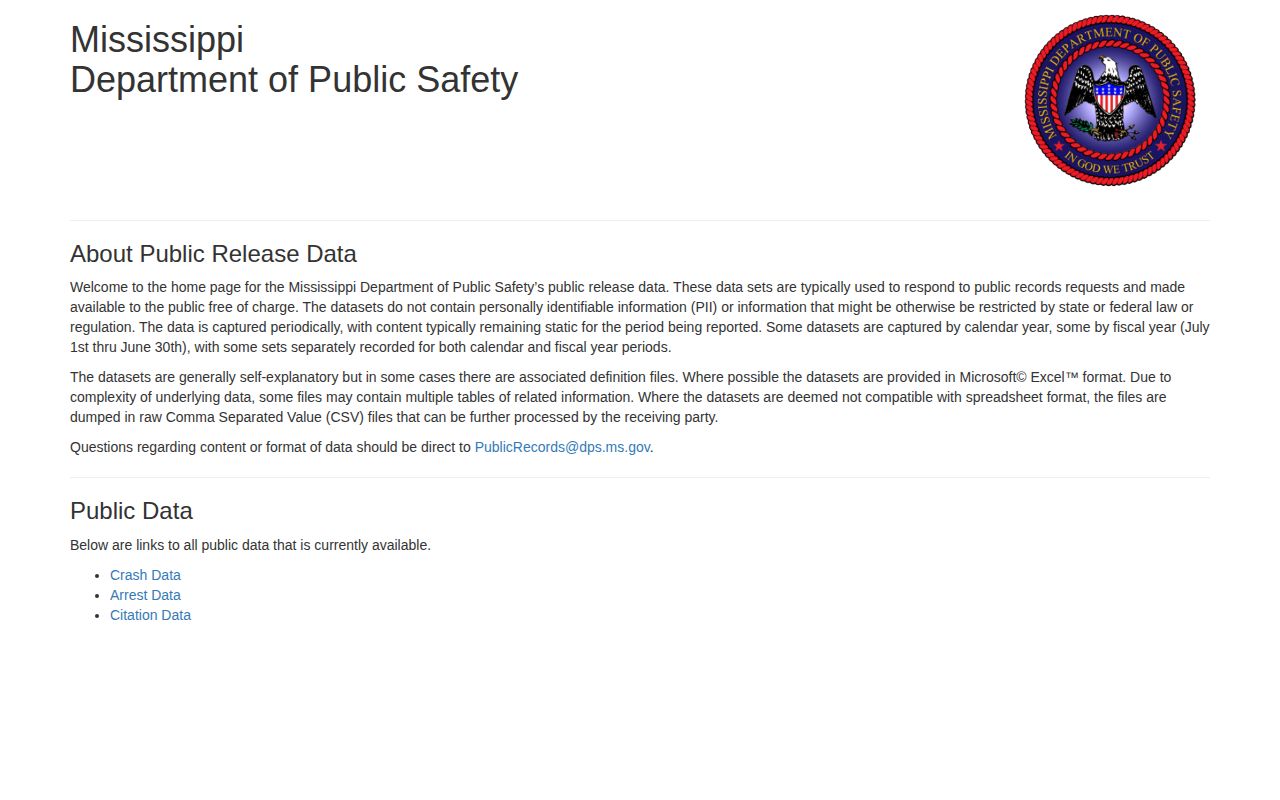
Use a county source for one booking, and use the portal for its stated statewide data purpose.
Unofficial Mississippi Booking and Photo Indexes
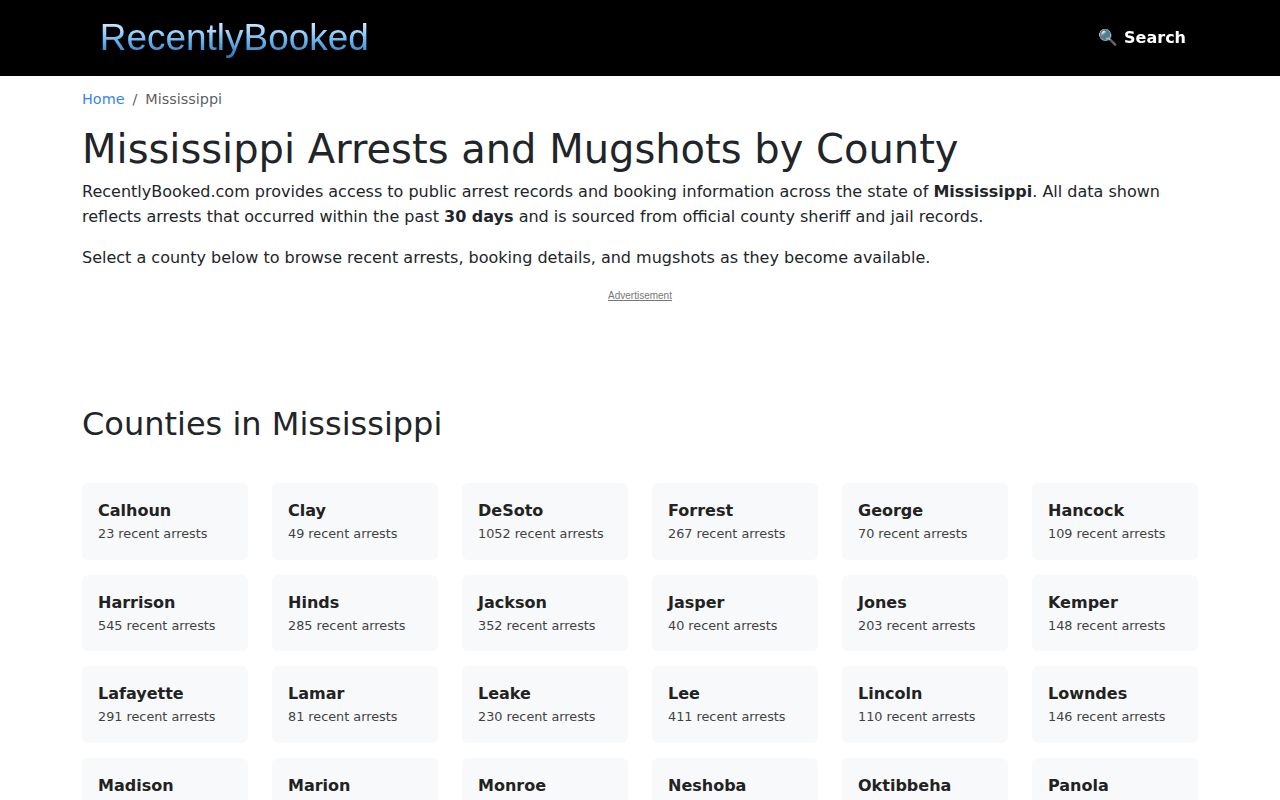
Unofficial indexes sit a step behind the real record. They can go stale or drop counties quietly. For arrest records, the official county or state source still wins, and the record custodian can settle any conflict. RecentlyBooked keeps a rolling county index of booking entries. Busted Newspaper covers only the counties it chooses, and Mugshots.com organizes older county material. None is a complete statewide arrest docket. The RecentlyBooked county page shows how bookings are grouped by county, not that each entry is current.
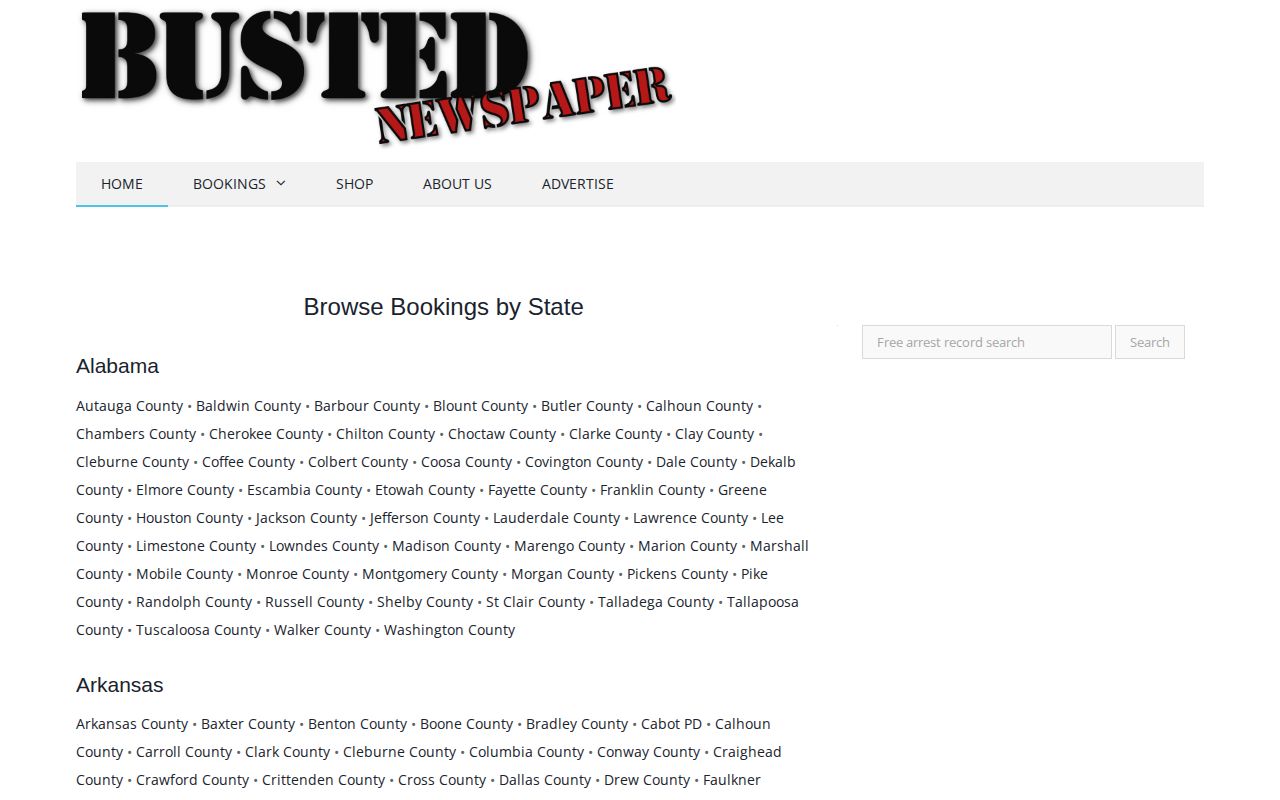
Need to confirm a date, charge, or booking photo? Go straight to the county jail or sheriff first. The Busted Newspaper screenshot lists county sections that shift over time, so treat it as a directory rather than any promise of statewide arrest coverage.
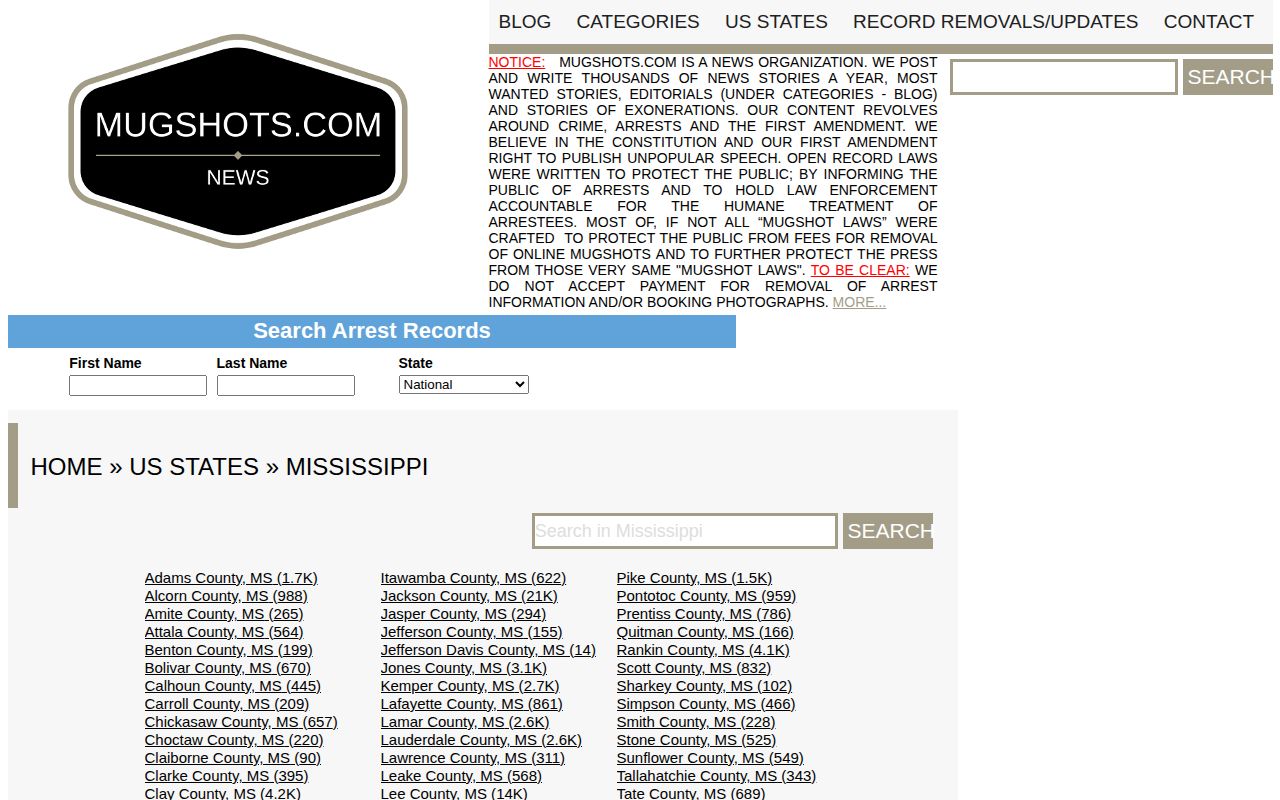
A county on the list may still have missing bookings. A missing county can still have arrests. The Mugshots.com screenshot displays a county-and-year archive with its own disclaimer, not a live record of who was booked today.
A publisher's correction policy is only a request channel. It never guarantees that an accurate arrest record will come down.
What a Mississippi Booking Record Shows
A booking record starts the moment a jail takes someone in. Mississippi law is specific about what follows. Under Miss. Code §19-25-63, every sheriff maintains a public jail docket. It logs the warrant or mittimus, the issuing authority, the person's name, and the receipt. Arrest date, commitment date, and cause go in as well. Time in custody, release or discharge, and any transfer receipt are logged too. The docket passes to the next sheriff. Still, the statute demands no searchable website and no booking photo on each entry.
The docket rule traces to the 1892 code, with a 1994 amendment added later. In 2020, the Ethics Commission ruled against Washington County. The county had broken the Public Records Act by withholding its docket. That order does not open every narrative or photo to the public.
| Record field | What it may show |
|---|---|
| Identity and booking number | Name and the jail's record key, where the portal exposes them. |
| Arrest and commitment dates | When the arrest occurred and when the sheriff received the person; those times can differ. |
| Warrant, mittimus, or authority | The legal or official basis for custody. A mittimus is a court order directing detention or delivery. |
| Cause or charge wording | The basis entered at booking, not a finding that the person committed the offense. |
| Custody duration and release | Time held and the date or authority for discharge, when shown. |
| Photo and physical details | Only if the custodian's system displays or releases them under its policy and applicable law. |
| MDOC correctional profile | MDOC ID, photo, physical descriptors, entry and current unit, location-change date, offenses, sentence details, county of conviction, sentence dates, and tentative release date. |
| Court outcome | A separate docket or disposition, not a guaranteed part of the jail booking page. |
Counties in Mississippi format booking records their own way. Adams County's portal lists release details and the arresting agency. Wayne County's inquiry goes further, with booking numbers, subject numbers, custody status, and date fields. Elsewhere you might see a case number, a bond amount, a court date, or a photo attached to the card. When the online entry is too thin, the docket is the fix, ask for it directly. Bookings are only half the picture, though.
The Mississippi Department of Corrections (MDOC) runs its own profiles for people in state correctional custody. Those track a sentence, not a fresh county arrest. The same person can show up in both systems for entirely different reasons.
Note: A missing photo or name in a county portal does not establish that no booking record exists.
Mississippi Mugshots and Photo Rules
Mississippi law lets the state collect booking photos in certain settings. Two statutes govern this: §45-27-7 and §45-27-9. They give DPS and the Mississippi Justice Information Center that authority. Nothing in them forces a county to publish photos. No blanket rule makes adult mugshots confidential or public, either. It comes down to the custodian and any exemption that applies.
Practice varies widely. Some county systems display photos with each booking. Others list a name and booking fields only. Copies floating around online can be stale or mislabeled. After a transfer to state custody, MDOC profiles include photos. The federal side is different: BOP offers no public booking photos, and immigration custody runs through separate DHS and ICE tools.
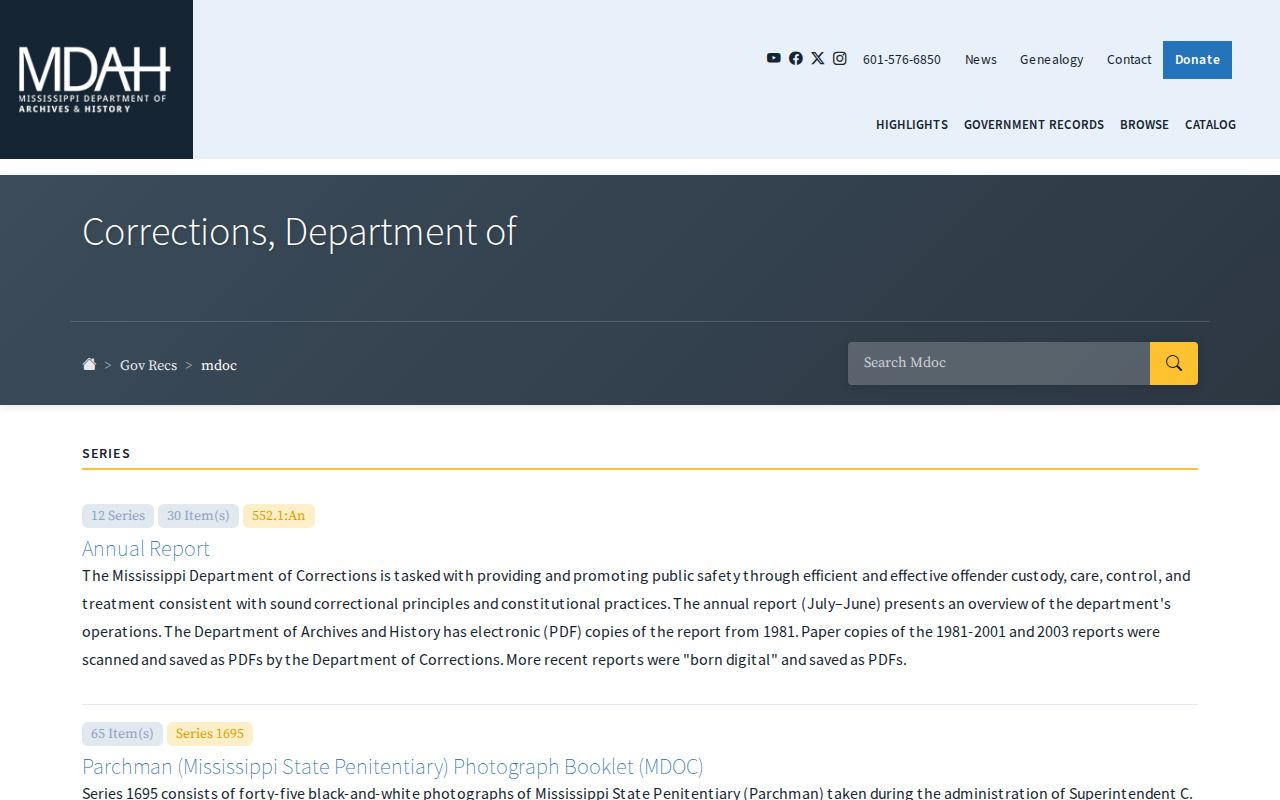
History has its own corner here. MDAH holds an MDOC collection of annual reports and Parchman photographs for archival research. Those serve historians, not anyone hunting current arrests. The MDAH MDOC collection documents that record series. Treat it as a research catalog, not a live inmate portal.
For current custody questions, go to the jail or MDOC. Old government records follow archival schedules and their own access rules instead.
Requesting Mississippi Arrest Records
Sometimes the online page is missing or too thin. Then you go to the custodian. A local jail-docket request belongs with the sheriff or the county records unit. For a Highway Patrol narrative, file through MDPS's Open Public Records portal, or ask the originating troop that holds the file.
- Choose the custodian. Use the county directory for a jail booking; use the MDPS Open Public Records portal for a state patrol report.
- Describe the file. Give the name, date range, county or troop, and case or booking number if known. Name each item requested.
- Ask about cost and timing. Fees may cover actual search, review, copying, and mailing; advance payment may be required.
- Track the reply. Where no other written procedure applies, access is due within one working day. No process may delay a decision beyond seven working days without a written explanation.
Mississippi law keeps denial paperwork on file for three years. A proper denial has to cite the exemption. Any nonexempt parts of the record should still come out. Fees also stay flexible. There is no fixed statewide charge for an MHSP arrest narrative. Crash reports are priced as a separate service. The Mississippi Ethics Commission's Public Records Act guidance walks through requesting, timing, fees, and appeals. One more tip: if a county feed vanishes, request the statutory jail docket. Do not assume the arrest record no longer exists.
Note: An agency can redact protected details while still providing the nonexempt part of a responsive record.
Mississippi Arrest Name Limits
Some arrest names stay sealed even under public records. Under Miss. Code §25-1-109, a law-enforcement agency may not release the name of someone arrested or cited for a misdemeanor, or held on one. Disclosure opens when the person is formally charged and arrested for that offense, subject to listed exceptions. That explains an unnamed incident report. It also explains a misdemeanor booking that no name search finds. A missing name is not proof an arrest never happened. Ask the agency how the rule applies. Whether a name comes out can hinge on the charge and on formal filing status. The law dates to 1997. A 2023 amendment took effect July 1, 2023. The public-records law still demands an exemption-specific response, and a custodian may release any nonexempt portion of the record. The Public Arrest Records link in the Statewide Guides card carries the fuller law.
Note: A county portal's search result reflects its current display rules and is not a complete statement of what Mississippi law permits.
Juvenile Arrest Records Stay Private
Mississippi keeps juvenile records behind a legal wall. The Youth Court Act does the guarding. Under Section 43-21-255, juvenile law-enforcement records are confidential, and private people or firms generally cannot obtain them. Narrow statutory exceptions exist. Youth-court files sit under §43-21-251. A serious offense may still allow limited fingerprinting or photos of the child. Even then, a child's name is no public roster item.
So leave juvenile names alone. Never copy, link, or republish a juvenile name, image, docket, or identifying detail pulled from a search result or an old screenshot. Only the current official custodian can decide whether an exception applies, such as certain adult-court convictions or specified repeat adjudications. Sealing can follow under §43-21-263 after dismissal or another statutory event. A cached image proves nothing about lawful public access. Adults get protections too, and once a court order or correction request exists, the current custodian controls the official record even if a stale search result lingers.
Note: Juvenile confidentiality is stronger than adult roster practice, so an old public-looking result should not be repeated.
Warrants and Mississippi Wanted Lists
Mississippi's statewide wanted list runs through the Mississippi Bureau of Investigation. A DPS Most Wanted profile can carry a name, photo, birth date, physical details, alleged offense, and warning or captured status. Status can lag, though. Tips flow through 1-888-8CRIMES or P3Tips. Never approach or detain anyone. Call 911 for immediate danger. County warrant checks belong with the sheriff, court clerk, or counsel, and the U.S. Marshals Service keeps separate federal profiles.
- Check the MBI wanted page and use its official tip route.
- Ask the county sheriff, court clerk, or counsel to confirm the warrant and case.
- If confirmed, seek lawful next steps through the court or an attorney; do not approach the person.
MDOC's parolee search is a supervision lookup. It is not a statewide fugitive list. MDOC publishes no permanent absconder roster, and a VINE alert about absconded supervision answers a different question than an MBI wanted profile.
After Arrest: Court and Custody Records
A booking entry only opens the file. Court records live elsewhere. The Mississippi Electronic Courts portal handles circuit and county cases, and the judiciary's Useful Links page adds Court Explorer plus a case-request form. Access depends on the court, the case type, and the clerk. Some material needs an account. Read the disposition to see whether a case was dismissed, resolved, tried, or still open.
Expungement usually takes a court petition and an order. The 2026 HB 1546 text cut the general wait for some eligible felony arrests from five years to three, though many exclusions apply. First-offender misdemeanors follow their own path, as do qualifying dismissed cases. The clerk or counsel must confirm eligibility and current filing steps. HB 455's clean-slate proposal remains unenacted.
An order can restrict official records yet leave older publisher copies and search caches in place. After the source changes, Google's outdated-content tool and a free publisher request may address stale results. Neither is a guarantee.
After sentencing, the MDOC inmate search takes a name or ID and can return a photo, physical details, current unit, offense and sentence data, county of conviction, and a tentative release date. Reception can run two weeks to 45 days. A county booking comes first. The separate parolee search covers supervision.
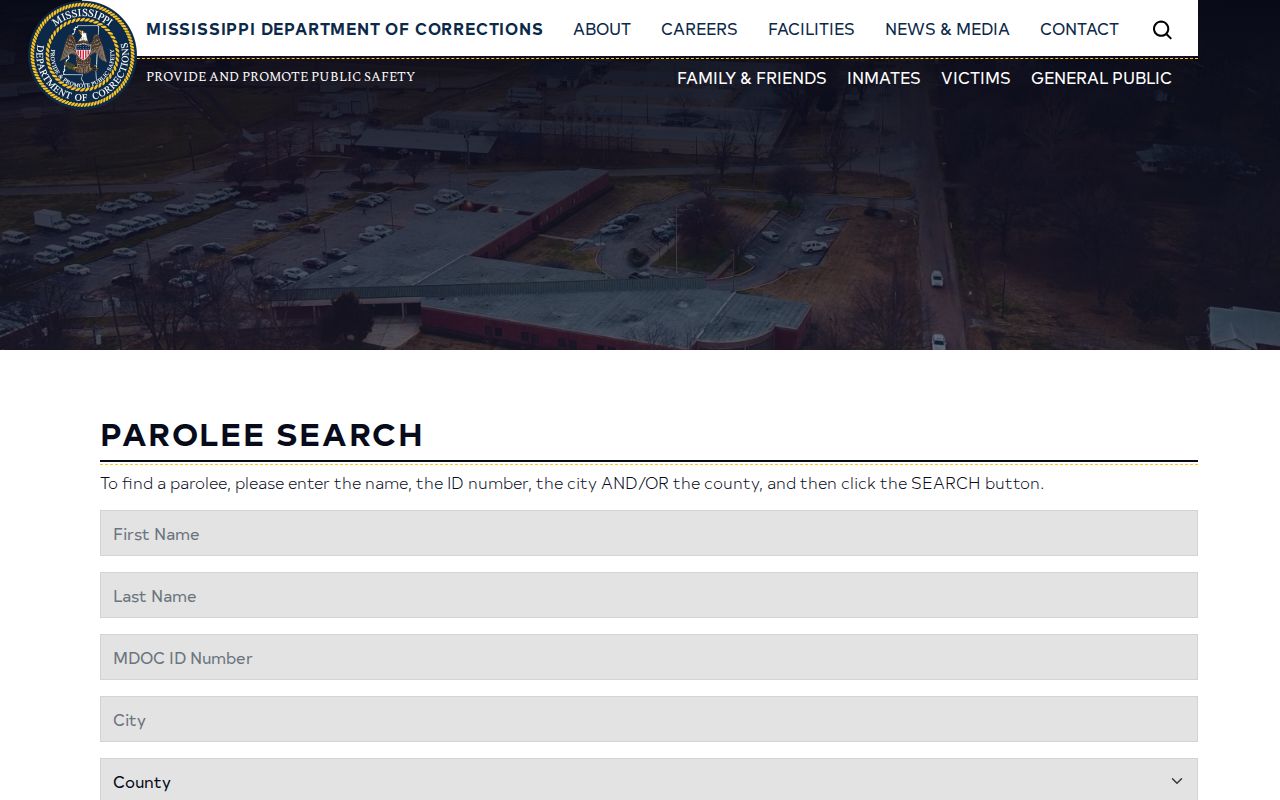
The MDOC parolee search screenshot shows its search fields and current status labels. It tracks supervision. County jail rosters stay separate.
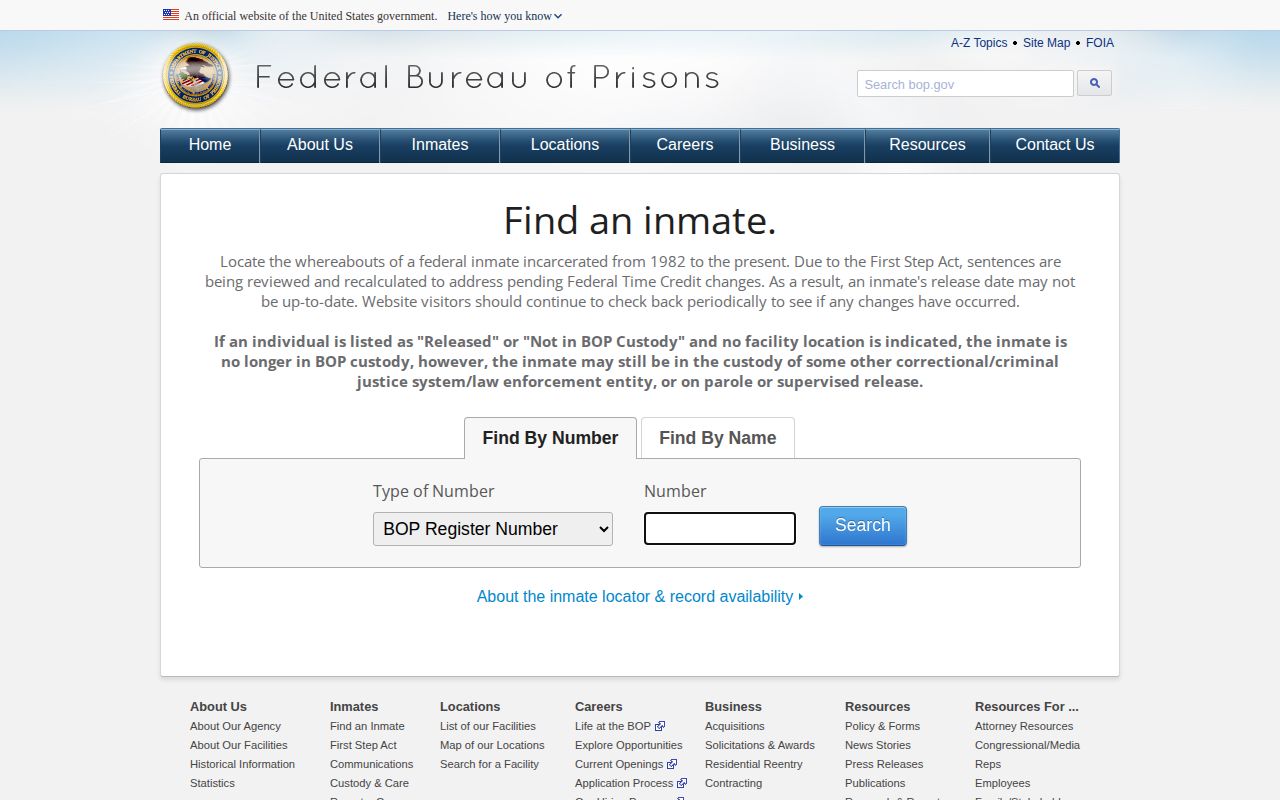
After an arrest lands someone in the federal system, the BOP locator is the first stop. It reaches back to 1982. Booking photos stay private there, so expect names and numbers only. The official locator page shows its search fields plainly, with no photo gallery of any kind, and any result it returns points to federal correctional custody rather than a Mississippi county arrest. For immigration holds, the ICE locator takes an A-number plus country of birth, or a full name with both birth details. ICE won't search for anyone under 18, and its help line is 1-888-351-4024.
VINE, in the main navigation, tracks custody changes at MDOC and participating county facilities. It is not a full arrest archive, and MDAH materials cover history rather than current custody records.
Free Correction Requests for Arrest Pages
Start with the official record. If a court order documents an error, free publisher routes exist. They cover Busted Newspaper, RecentlyBooked, and Mugshots.com. Each sets its own criteria and wants the listing link plus supporting details. None promises removal of every accurate public record. Arrests.org's form and Mugshots.zone's contact route offer free correction channels too. Mugshots.zone relies on county hosts rather than a verified statewide index. No Mississippi anti-pay-to-remove statute existed by September 22, 2026. A publisher request cannot change a court docket. News outlets make no uniform deletion promise.
Mississippi Arrest Records Beyond the Web
Retention rules tell you what an office must keep, not what a website shows today. Under the July 15, 2025 County General Schedule, the jail docket is permanent. Arrest reports carry terms of 75 years for listed no-limit or death-penalty felonies. Other arrests run 25 years. Other offense reports run from five to 75 years. Jail census logs survive three years after audit release. Inmate case files last 25 years after release.
Booking photos follow no single permanent series of their own. A mugshot usually rides along with the arrest, incident, jail, or inmate record behind it. So a photo vanishing from the web proves nothing about destruction. And a permanent docket never promises the public sees every booking photo forever. A live feed captures one moment. An old newspaper, a copied index, and a search hit each capture time differently. A retention schedule captures it in yet another way.
Older records live at the Mississippi Department of Archives and History. MDAH offers catalogs, county inventories, and research requests. Staff can quote fees for copies or deeper digging. Historical MDOC and Parchman files document the past. They are not proof of a current arrest.
The MDAH research screen displays the catalog and the request path. It points you toward older government material, not toward who sits in custody now.

When a record falls outside a vendor's window, go to the agency that made it. Tell the sheriff, court clerk, DPS, MDOC, or MDAH what record you want and the date range you need.
Note: A permanent docket schedule does not require an agency to keep a searchable website online for the same period.
Mississippi Court and Custody Terms
Each term in a custody or court record marks a different stage. The definitions below separate a booking entry from a court finding.
- Booking
- Jail intake after an arrest, with identity and custody details entered in a record.
- Arraignment
- A court hearing where a person is told the charge and enters a plea.
- Bond
- A condition or amount set for release while a case is pending.
- Disposition
- The court's recorded result for a charge or case.
- Expungement
- A court-ordered legal remedy that restricts or removes qualifying records under the statute.
These labels never replace the docket or a lawyer's advice. Read each source's label exactly as written, then check the court record for later changes.