
Mississippi Arrest Logs Have Separate Sources
Start with the anchor. The county jail docket is the sheriff's permanent written record of custody and release. It is required by Mississippi Code Section 19-25-63. The web layer sits on top of that, and it is far from uniform. Some counties run an official jail page. Others offer a date-query form, a news archive, or a third-party index. These are separate records, not pieces of one statewide count. They vary widely in how complete they are.
The window label tells you a lot. Adams County's sheriff portal, for one, offers a 72-hour variant. That is a short rolling view rather than a long-term archive. Wayne County's Inmate Inquiry has booking-date fields. But a date range may not stay available forever. Pearl River County's “Books 24hr” page covers the same day only. For a wider span, run a date query. Or ask the holding county for the jail docket itself.
Where Mississippi Arrest Logs Appear
Go to official sources first. They name the agency or custodian behind the record. County booking tools, state enforcement news, and independent reporting each answer a different question. A jail entry belongs with the county's own source. A statewide press release may describe an operation without naming every person booked.
| Source type | What it can show | Window and limit |
|---|---|---|
| County sheriff or jail | Adams County's 72-hour roster; Wayne County's booking-date inquiry; other county-specific records. | Windows and fields vary. A current list may not retain released bookings. |
| Mississippi Highway Safety Patrol / DPS | DPS News Archive releases about patrol, MBI, Bureau of Narcotics, and joint operations. | Event-driven news, not a complete daily booking log. |
| Local and regional news | Police beats, jail docket posts, incident coverage, or selected arrest stories. | Editorial selection and archive depth vary by outlet. |
| Independent arrest indexes | County pages, rolling listings, or older county and year material. | Unofficial, copied, incomplete, and possibly stale. Verify with the source agency. |
The Mississippi public-data portal supplies arrest, citation, and crash data for context. It is not a live name-and-photo roster. A trend file cannot confirm who was booked into a particular county jail.
Note: A state agency's arrest announcement may describe a local operation while the county jail holds the booking record and custody status.
How to Find a Mississippi County Blotter
Pick a county before searching news archives. The arresting agency may differ from the jail that recorded the intake. A city police post often sends readers to the county roster for custody detail.
- Set the likely county and date span. Use the location of the arrest or the jail named by an official release. For older events, note both the arrest date and the date a page was published.
- Check the county's official source. Use the County Directory link in the top navigation to reach the sheriff or jail. Look for a rolling window, a date range, a jail docket, or a records-request link.
- Read the source label closely. A “current inmates” page may omit people released before the search. A 72-hour page is not a permanent log, and a newspaper roundup can be selective.
- Ask for older records from the custodian. Give the person’s name, date range, agency, and record type. A booking number, case number, or copy of a release can help staff locate the right file.
For a just-made arrest, start with the Daily Arrest Report landscape, then try the county's wider date range or a written request. For statewide context, Mississippi Recent Arrests shows how booking, court, patrol, and custody sources fit together.
Mississippi News Blotters Are Selective
News reporting has a clear strength. A story can preserve an event after a short roster rolls off. Still, a blotter is an editorial record, chosen by editors. Two examples show the range. The first is the Wayne County News jail docket. The second is the Delta Daily News Police Beat. They are distinct local formats, not one weekly Mississippi log.
Stories have limits of their own. One may repeat a police statement, spotlight a major event, or skip later court action. A paper's archive can hold a story after an official roster has changed. But corrections follow that publisher's policy. The publication date may not match the booking date at all.
Third-party indexes sit even further from the official record. RecentlyBooked Mississippi runs a rolling state and county directory. Its date range and refresh time vary by county. The state landing page is not a complete Mississippi docket.
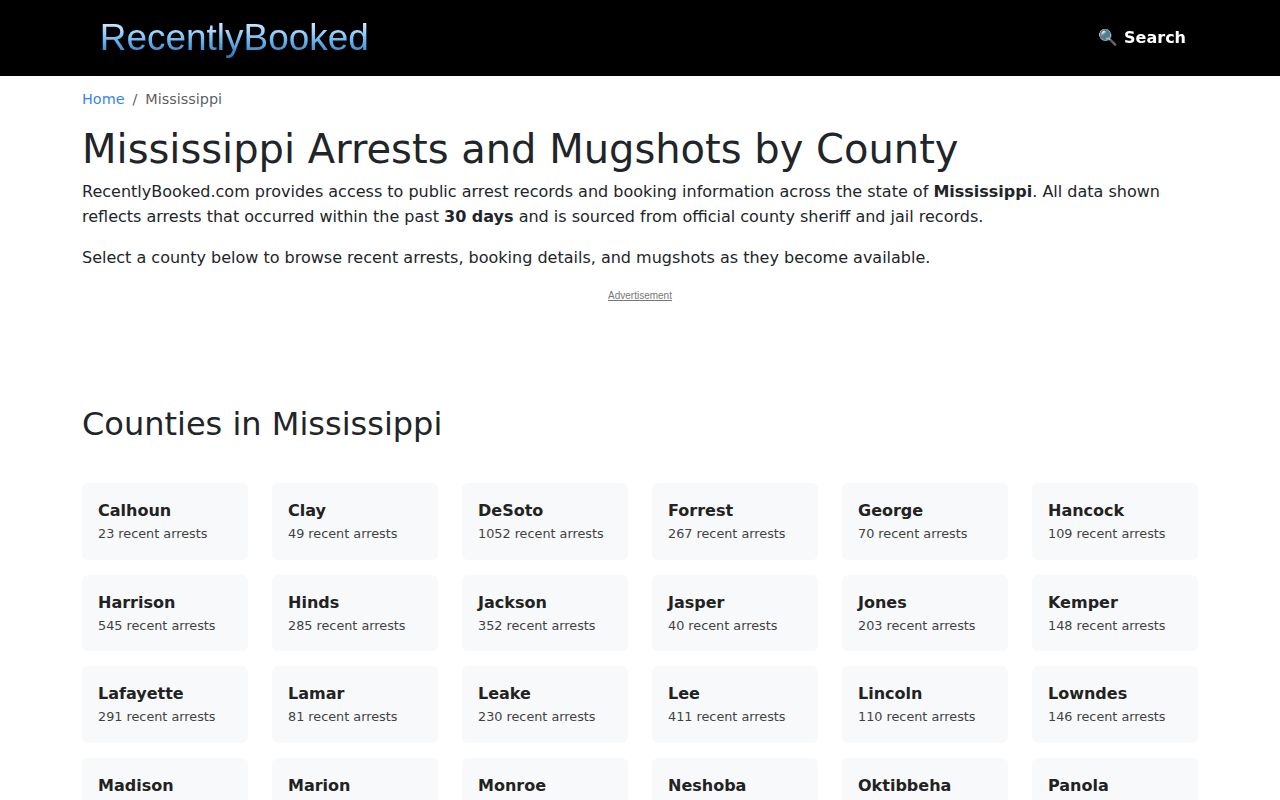
Remember what RecentlyBooked actually is. Its county links and date window are publisher features, not official retention rules. Verify an entry with the named county agency, and treat any copied date or booking photo as secondary material that may be stale or incomplete.
Weekend Arrest Logs Can Post Late
Booking never pauses for the weekend. A newspaper or public-affairs office, though, may wait for its next workday. A Monday police beat can gather two days of arrests in one post. A vendor page may show a rolling period instead. Mississippi sets no rule requiring a Sunday post or Monday roundup on a fixed schedule. Silence does not mean the weekend was quiet.
Always compare two dates: the event and the publication. A Monday story can describe an arrest made days earlier. An arrest announced late may have entered custody before the release was drafted. When a date is missing, ask the source. Ask whether it means arrest, intake, report, or publication. The order of cards on a webpage tells you nothing about when things happened.
A state patrol release helps when it names an operation. It cannot replace the local jail entry. For present custody or a missing booking number, ask the county that accepted the booking.
Note: Weekend posting patterns belong to each agency or publisher; no single Mississippi weekend schedule was verified.
What a Mississippi Arrest Log Entry Shows
A web entry may show only a name. It may list a charge label, a booking time, or a status. The statutory jail docket holds much more. Under Section 19-25-63, the sheriff records the warrant or mittimus. The record also names the issuing authority. It covers the person's name and receipt, arrest and commitment dates, cause or authority, duration, release or discharge, and receipt for the person. A mittimus is simply a court order sending someone to jail. A web blotter should never be mistaken for that full record.
| Jail-docket field | What the record tracks |
|---|---|
| Warrant or mittimus | The legal paper or order connected to custody. |
| Issuing authority | The court or authority that issued the process. |
| Name and receipt | Who was received and when the jail took custody. |
| Arrest and commitment dates | Separate dates that can mark different steps in the process. |
| Cause or authority | The basis recorded for the commitment. |
| Duration and release | How long custody lasted and when discharge occurred. |
Take the charge exactly as the source lists it. Booking lists do not record court outcomes. A disposition is the court's own recorded result in a case, and it can differ from the jail's release status. So never infer an outcome from a roster. For the real answer, go to the court clerk or the official court portal handling the matter.
Mississippi Arrest Records Outlast Web Logs
A web log rolls on and old entries vanish. The official record lasts far longer. Mississippi controls retention through formal schedules. A schedule tells each government office how long to keep a given record type. The Mississippi Department of Archives and History's 2025 county schedule lists jail dockets as permanent. Arrest reports stay 75 years for felony arrests in the listed no-limit or death-penalty categories. Other arrests carry a 25-year period. Offense reports follow their own schedules, and jail census sheets, meal logs, and inmate case files do too.
Those are records-management rules. They do not promise a booking photo stays online. The schedule creates no separate permanent mugshot file. A photograph instead follows whichever record series and custodian hold it, unless a more specific rule applies. A blank search result may just mean the site rolled the entry off. The official file can still sit safely in a drawer.
The MDAH Mississippi Department of Corrections collection holds historical annual reports and Parchman photo material. That collection serves institutional history. It is not a current statewide booking-photo search.
Need a record outside the live window? Send a written request to the sheriff or agency that created or holds it. Mississippi's Public Records Act calls public records public property. Agencies may charge reasonable fees tied to actual search, review, duplication, and mailing costs. When an agency sets no different written process, the Ethics Commission describes access within one working day and a seven-working-day maximum, with a written explanation if the agency misses that limit. The agency must name a specific exemption and release any segregable nonexempt material.
The Ethics Commission's Public Records Act guidance walks through the request and fee rules. Ask the custodian for its written procedure and keep the response. Say whether you want a jail docket, an arrest report, or an offense report, so the right retention schedule gets applied.
Note: Retention schedules govern government records; a publisher's archive and a search-engine result follow separate policies.
Mississippi Arrest Index Coverage
Independent arrest sites can mimic real archives. Their reach and refresh habits are not retention rules. Busted Newspaper's Mississippi directory lists only the counties it currently covers, and its county navigation proves neither full coverage nor a current jail record.
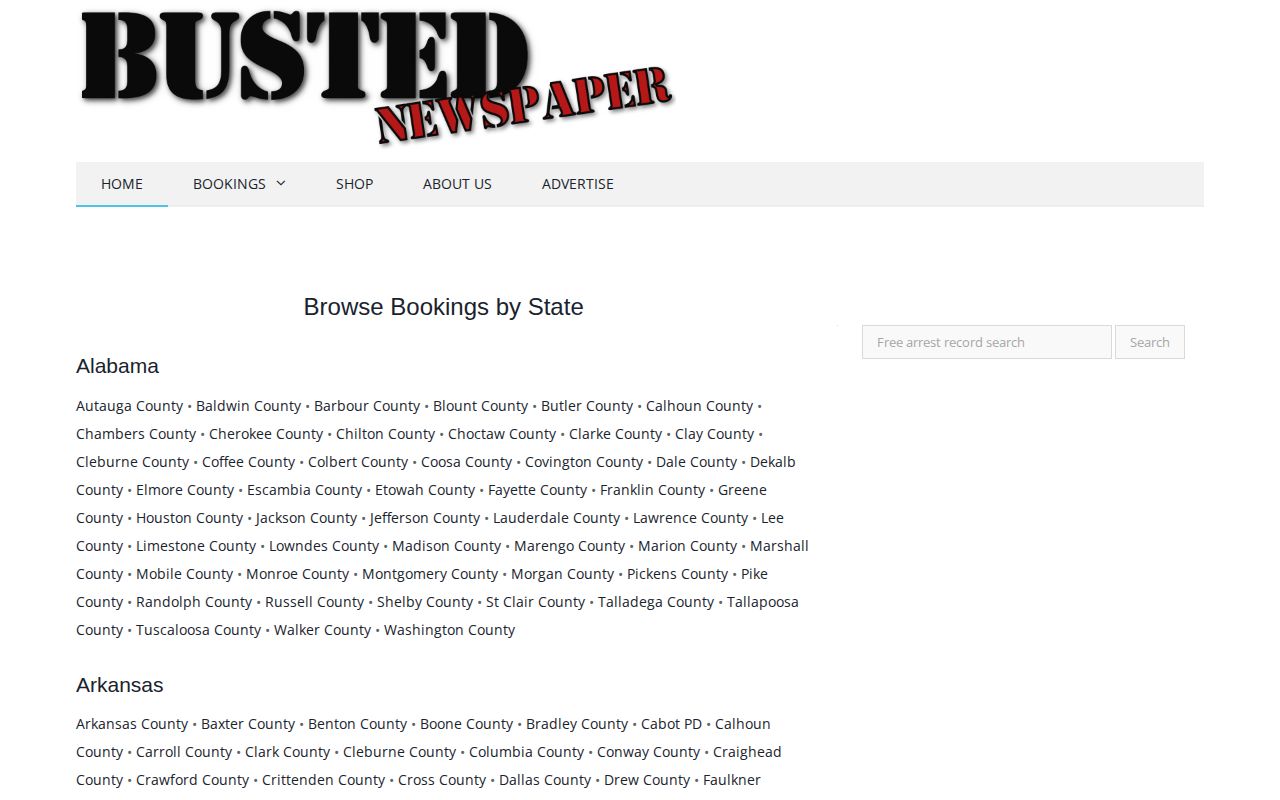
Treat the directory as a secondary route that shifts over time. Confirm any entry with the county jail, sheriff, or court before trusting its wording as current.
Mississippi County-Year Arrest Archives
Mugshots.com's Mississippi section sorts material by county and year. That layout can resemble an official archive. It isn't one; the site's own notice calls it a publisher, and the county-and-year structure belongs to the publisher, not to any county docket.
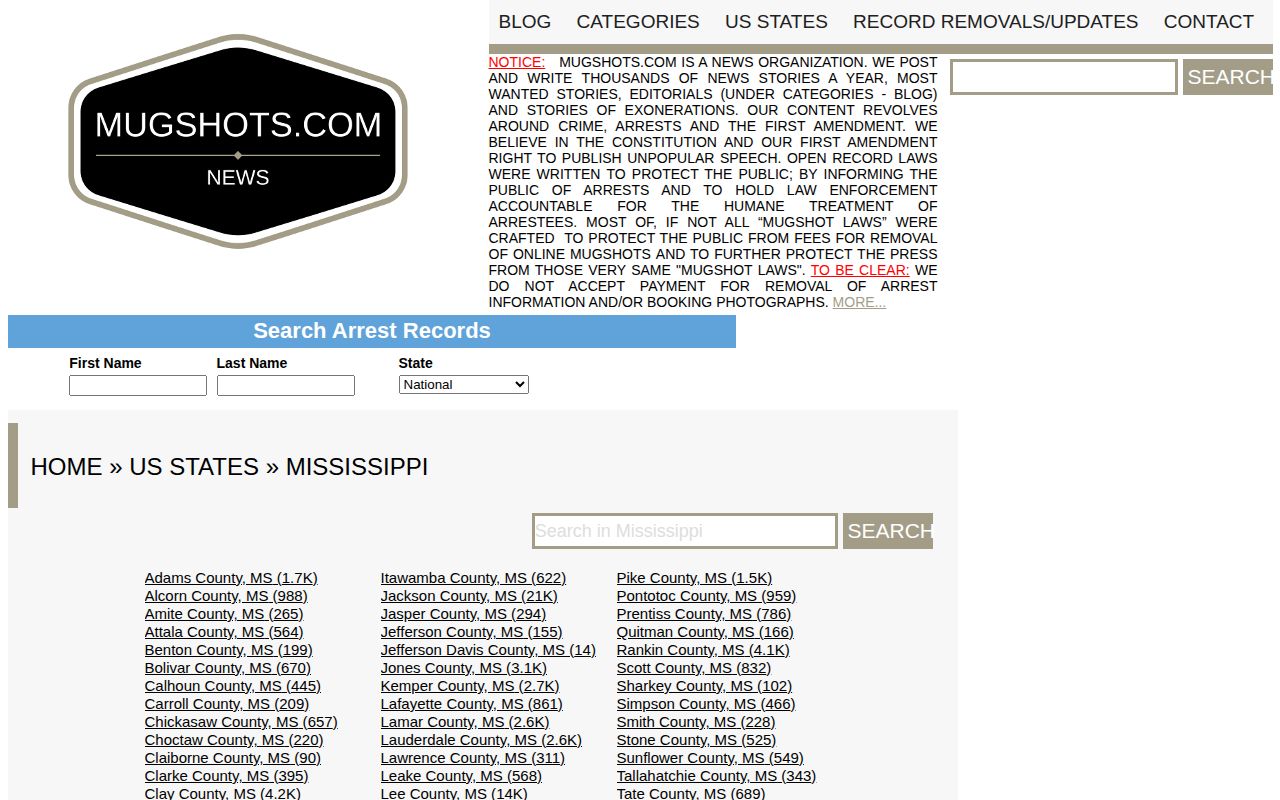
Read its archive dates as the publisher's display history only. A copied page may be stale, incomplete, or corrected after the county changes its live view.
Mississippi County-Host Arrest Archives
Mugshots.zone runs on county-level hosts rather than one stable statewide index. That layout belongs to the publisher, so treat it as a private site arrangement rather than any official arrest archive.
Every independent listing stays secondary. Its wording may not match the current jail record. For a booking record, use the official custodian; for the case outcome, use the court.